
7 Signs Your Cat Needs a Dental Exam This Summer
7 Signs Your Cat Needs a Dental Exam This Summer
Summer is here in Fort Mill, and while you’re busy enjoying the sunny days with your feline companion, it’s important not to overlook your cat’s dental health. Many cat owners notice changes in their cat’s breath or eating habits but may not realize these subtle signs point to underlying dental issues. At Greenway Animal Hospital, our compassionate team of veterinarians is dedicated to keeping your cat’s smile healthy with gentle, modern dental care right here at our 887 Gold Hill Rd Suite D and E, Fort Mill, SC 29708. In this blog, we’ll walk you through seven key signs that your cat may need a dental checkup, explain why these problems develop, and share how timely veterinary dental exams can make all the difference. Whether you’re in Fort Mill or a nearby community, our goal is to help your cat maintain optimal oral health all summer and beyond.
Recognizing the Signs: When Your Cat Needs a Dental Exam
Cats are masters at hiding discomfort, so dental disease can go unnoticed until it’s quite advanced. Still, your cat may be sending you clues that something isn’t right in their mouth. The most common signs your cat needs a dental exam include persistent bad breath, changes in eating habits such as dropping food or chewing on one side, visible tartar or red gums, pawing at the mouth, drooling, reluctance to be touched around the face, and unexplained weight loss. You may notice your cat is less enthusiastic about eating dry food or seems to prefer soft food; this can indicate oral pain. Sometimes, owners see their cat grooming less, which can also be a sign of dental disease making it uncomfortable for your cat to use their tongue or teeth. If you observe one or more of these changes, it’s time to consider a dental evaluation.
Bad Breath: More Than Just a Nuisance
If you’ve recently noticed your cat’s breath has become unusually strong or foul, this can be one of the earliest warning signs of dental disease. While a mild odor is normal, a persistent, strong smell may point to underlying infection or inflammation. Bad breath often results from bacteria building up on your cat’s teeth and gums, which can quickly progress without professional attention.
Eating Changes and Food Preferences
Dental discomfort often causes cats to change their eating habits. Watch for your cat dropping kibble, chewing only on one side, suddenly preferring canned food, or hesitating before eating. These subtle shifts often mean your cat is trying to avoid pain, and they shouldn’t be ignored.
Visible Tartar, Red Gums, and Oral Changes
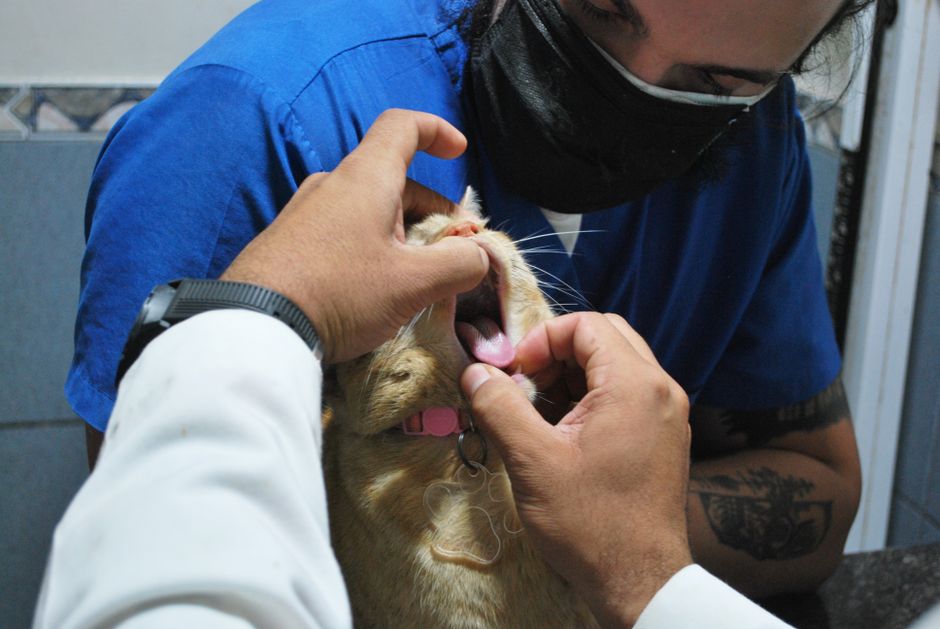
Take a closer look at your cat’s mouth if they let you. Tartar appears as yellow or brown buildup on the teeth, and red, swollen, or bleeding gums are strong indicators of gingivitis or periodontal disease. You might also spot loose or broken teeth, oral sores, or even pus along the gumline. These changes are clear signs that your cat would benefit from a dental exam.
Pawing, Drooling, and Sensitivity
Some cats will paw at their mouths, drool more than usual, or resist having their face touched as dental problems worsen. These behaviors are your cat’s way of coping with pain or discomfort. If your cat suddenly reacts when you try to scratch their chin or cheeks, it’s time to schedule an appointment.
Weight Loss and Grooming Difficulties
Unexplained weight loss, a dull coat, or reduced grooming can all be linked to oral pain. Cats use their tongues and teeth to keep themselves clean and healthy, so dental problems often spill over into their overall wellbeing. If your cat seems less interested in self-care or looks unkempt, underlying dental issues may be the cause.
Why Do Cats Develop Dental Problems?
Understanding why dental issues are so common in cats can help you stay ahead of problems before they start. Most cats develop some form of dental disease by age three, making regular dental care just as important as vaccinations or annual exams.
Plaque, Tartar, and Periodontal Disease
Dental disease in cats usually begins with the accumulation of plaque—a sticky film of bacteria—on the teeth. Without regular cleaning, this plaque hardens into tartar, which irritates and inflames the gums. Over time, bacteria can invade below the gumline, leading to periodontal disease that damages the structures supporting the tooth. Untreated, this process causes pain, infection, and eventually tooth loss.
Resorptive Lesions: A Unique Feline Concern
One dental problem unique to cats is tooth resorption. In this condition, the body begins to break down the tooth structure, causing extreme pain. Tooth resorption is common but difficult to spot without veterinary dental radiographs, as the affected teeth may look normal above the gumline. Signs include refusal to eat, jaw chattering, or sudden pain when the mouth is touched.
Other Contributing Factors
Several factors can increase your cat’s risk of dental disease. Genetics play a role, as some breeds are more prone to oral issues. Diet, especially if your cat only eats soft food, may allow more plaque to build up. Age is another factor; older cats are more likely to have dental disease. Additionally, underlying health conditions, such as feline immunodeficiency virus (FIV) or diabetes, can weaken the immune system and worsen oral health.
How Professional Dental Care Helps Your Cat
When your cat shows signs of dental disease, a visit to your veterinarian is the best way to address the problem and prevent further complications. At Greenway Animal Hospital, we offer comprehensive dental services, including thorough oral exams, dental cleanings under anesthesia, dental radiographs, tooth extractions, and advanced oral surgery when needed.
What to Expect During a Dental Exam
Your cat’s dental appointment will begin with a detailed oral examination. Our veterinary team will assess your cat’s teeth, gums, and oral tissues for signs of disease. Dental radiographs are often recommended to check for hidden problems below the gumline that cannot be seen with the naked eye. You can learn more about the value of dental radiographs for pets and how they help us accurately diagnose dental disease.
If we find significant tartar or gingivitis, we may recommend a veterinary dental cleaning. This involves scaling and polishing the teeth under anesthesia, allowing us to remove plaque and tartar above and below the gumline safely and thoroughly. If diseased or broken teeth are identified, tooth extraction or pet oral and dental surgery may be necessary to relieve pain and restore oral health.
Why Anesthesia is Important
Many cat owners worry about anesthesia, but it is essential for a safe and effective dental cleaning. Anesthesia keeps your cat pain-free and still, allowing our veterinarians to clean every tooth surface, examine the mouth thoroughly, and perform extractions or other procedures as needed. Our team uses advanced monitoring and protocols to minimize risk and ensure your cat’s comfort at every step.
Preventing Dental Disease at Home
While professional dental care is the cornerstone of oral health, there is much you can do at home to help maintain your cat’s healthy smile between visits. Brushing your cat’s teeth daily with a pet-specific toothbrush and toothpaste is one of the most effective ways to control plaque buildup. Many cats can be trained to accept gentle brushing if you start slowly and use positive reinforcement.
Offering dental treats or dental diets approved by your veterinarian can also help reduce tartar. Encourage your cat to chew on safe dental toys designed to clean teeth and massage gums. Routine wellness exams allow us to monitor your cat’s oral health and catch minor issues before they become major problems. Be sure to ask our veterinary team for advice on the best home dental care products for your individual cat.
When to Schedule a Dental Exam for Your Cat
If you notice any of the signs described above—such as bad breath, changes in eating habits, red gums, or drooling—it’s time to schedule a dental exam with your veterinarian. Dental disease can quickly progress and cause significant pain, infection, and even impact organs such as the heart and kidneys if bacteria enter the bloodstream. Early intervention is key to preventing serious complications.
Even if your cat seems healthy, regular dental checkups are recommended as part of their preventive care plan. Most cats benefit from an annual dental evaluation, but some may require more frequent visits based on age, breed, or medical history. If you are unsure whether your cat needs a dental exam, our veterinary professionals are always happy to discuss your concerns and help you make an informed decision.
Why Choose Greenway Animal Hospital for Cat Dental Care?
At Greenway Animal Hospital, your cat’s comfort and long-term health are our highest priorities. Our modern facility offers a full range of dental services, from routine cleanings and dental radiographs to advanced oral surgery and extractions. Our veterinarians take the time to explain your cat’s oral health needs, answer your questions, and ensure you feel confident in your cat’s treatment plan.
We proudly serve Fort Mill and surrounding communities, including Tega Cay, Baxter Village, and Lake Wylie, providing personalized, family-oriented care with extended appointment times so your cat never feels rushed. Our team believes that preventive dental care is an essential part of your cat’s health and happiness, especially during the busy summer months when subtle changes can be easy to miss.
If you’re searching for a veterinarian near me who truly understands feline dental health, look no further than Greenway Animal Hospital. To schedule your cat’s dental exam or learn more about our veterinary dental cleaning and dental radiograph services, call our team at (803) 239-4477 or visit us at 887 Gold Hill Rd Suite D and E, Fort Mill, SC 29708. Your cat’s healthiest, happiest summer starts with a healthy mouth—let us help protect their smile for years to come.
This blog is intended for informational purposes only and should not replace professional veterinary advice. If you have concerns about your cat’s health, please contact your veterinarian directly.



.svg)


